Read Together · August 2026
On Showing Up for Each Other
Six books — one picture book, one for teens, three adult reads, and one for the fiction reader — woven around what it means to truly connect.
In July we asked what we would make if we gave ourselves real permission.
August asks the harder question: who do we make it with?
Creativity without connection is just noise. The things we build, the lives we shape, the work we pour ourselves into — all of it is made richer, more meaningful, and more sustainable when it's held inside genuine relationship. With a partner. A friend. A parent or child. A neighbor who shows up when you don't expect them to.
This month we're exploring what it actually means to connect — not the surface-level version, not the social media version, but the real, complicated, sometimes uncomfortable, always necessary work of showing up for another person and letting them show up for you.
These six books approach that from every angle — a child learning that love travels even across distance, a teenager discovering what it means to be truly known by another person, a therapist who becomes a patient and discovers what it means to be truly known from the other side of the couch, a researcher unpacking why adult friendship is so hard and what to do about it, a psychologist explaining why we're wired for connection the way we are, and a novelist who tells the truth about female friendship in a way that most books are too polite to attempt.
No pressure to read all six. No pressure to finish any of them. Just an open space to show up — for the books, for the conversation, and for each other.
Looking for more, or already read your pick? I've put together the full August reading list over on my Bookshop.org list — honorable mentions included. No pressure to buy, but if you do, shopping through my link supports independent bookstores and helps me keep building these each month.
The through line thread
Connection doesn't require perfection. It requires presence.
That's the thread running through every book this month. Hold onto it.
Picture book · Ages 3–8
The Invisible String
Patrice Karst
"The book that gives children a name for what they already feel."
Some connections don't need to be seen to be real. When a child wakes up scared in the night, or misses someone who is far away, or can't understand why the people they love sometimes have to leave — this is the book that helps. The invisible string of love that connects us to the people we care about doesn't break with distance or time or even loss. A four-year-old understands this completely. So does a forty-year-old sitting with grief.
Read it together. Then ask each other: who is on the other end of your invisible string right now?
The thread: the connections that matter most are the ones we carry with us everywhere we go.
Young reader · Ages 14+
Aristotle and Dante Discover the Secrets of the Universe
Benjamin Alire Sáenz
"One of the most honest books ever written about what it means to be seen."
Aristotle and Dante meet at a swimming pool one summer in El Paso and form a friendship that changes everything — slowly, quietly, with an emotional depth that most adult novels never reach. This is not a fast book. It is a patient one. It asks you to sit inside the experience of two boys learning to know each other, and to notice how rare and how precious that kind of knowing actually is.
A note for parents: this book deals with identity, including the protagonist's discovery of his sexuality, handled with extraordinary tenderness. Ages 14+ is the right call. It is one of the most important books a teenager can read about friendship and belonging.
The thread: to be truly known by another person is one of the rarest and most necessary experiences a human being can have.
Adult · MEMOIR
Maybe You Should Talk to Someone
Lori Gottlieb
"A therapist goes to therapy — and discovers what it means to be truly known from the other side of the couch."
Lori Gottlieb is a therapist whose life falls apart. So she does what she tells her own patients to do: she finds a therapist herself. What follows is one of the most disarmingly honest and genuinely funny books ever written about the interior of a human life — told from both sides of the therapeutic relationship at once. It's a book about the stories we tell ourselves, the walls we build without realizing it, and what it actually takes to let another person see us clearly.
For a month built around connection and being known, this is the memoir that earns its place. Not because therapy is the answer — but because Gottlieb's experience of being seen, truly seen, by someone willing to stay present with her mess, is one of the most vivid portraits of what real connection looks like in print.
The thread: being known requires being willing to be seen — all the way through, not just the presentable parts.
Adult · PERSONAL DEVELOPMENT
Platonic
Marisa Franco
"The book that finally gives adult friendship the serious attention it deserves."
Why is it so hard to make and keep friends after a certain age? Why do we let friendships drift without ever meaning to? Why does the loneliness of adulthood feel so different from any other kind of loneliness — quieter, more shameful, harder to name?
Marisa Franco is a psychologist and friendship researcher who has spent her career studying exactly these questions. Platonic is warm, research-backed, and deeply personal — a book that doesn't just diagnose the problem but gives you real, practical tools for building the kind of friendships that sustain you. The natural anchor read for this month.
The thread: adult friendship doesn't happen by accident. It happens by showing up, reaching out, and being willing to be the one who tries first.
Adult · Personal Development
Attached
Amir Levine & Rachel Heller
"The book that explains why you show up the way you do in every relationship you have."
Your attachment style — secure, anxious, or avoidant — was shaped early and shapes everything. How you respond when someone pulls away. How you feel when things get too close. Whether you find it easy or excruciating to ask for what you need. Amir Levine and Rachel Heller make attachment theory accessible and immediately applicable — this is not a book you read and file away. It is a book that changes how you see yourself and the people you love, starting this week.
Read it alongside Platonic and notice how differently the same insight lands when you're reading about friendship versus about your own wiring.
The thread: understanding how you're built to connect is the first step toward connecting better.
The fiction reader · Adult · Literary fiction
My Brilliant Friend
Elena Ferrante
"The novel that tells the truth about female friendship — all of it."
Elena and Lila grow up together in a poor neighborhood in Naples, their friendship one of the most complex, competitive, tender, and devastating relationships in contemporary fiction. This is the first book in Ferrante's Neapolitan Novels — four books that have captivated millions of readers worldwide not because they idealize female friendship but because they refuse to.
This is not a book about women who support each other perfectly. It is a book about women who know each other completely — and what that kind of knowing costs. If you've ever had a friendship that felt bigger than you could fully hold, you will recognize something of yourself on every page.
The thread: the deepest connections are rarely the simplest ones — and that is exactly what makes them worth everything.
The reading ritual
How to read these together
Start with The Invisible String — read it aloud, slowly, and let the conversation that follows be whatever it needs to be. Ask your little one who is on the other end of their invisible string. Then answer it yourself.
Aristotle and Dante works best as an independent read for your teenager — give them space with it. But make yourself available for the conversation that might follow, because this book tends to open doors. If they want to talk, be there.
For the adult reads, I'd suggest starting with Maybe You Should Talk to Someone in the first few days of the month — let Gottlieb's warmth and honesty set the emotional tone before you move into the more analytical reads. Then move into Attached in the first half of the month proper, letting it reframe how you see your own patterns before you arrive at Platonic, which will ask you to do something harder: reach out, try first, let yourself be the one who initiates. The order matters. Let the story come first, then the understanding, then the action.
My Brilliant Friend can be read alongside everything else or saved for the last week of the month. Either way, let it be its own experience — something you don't rush through. Ferrante's writing rewards patience.
The common thread this month isn't really about learning how to make friends or fix your attachment style or understand the science of belonging. It's about the quieter, more uncomfortable practice underneath all of it: letting yourself be known. By the end of August, if you've been paying attention, you might find yourself sitting with a different question than the one you started with — not how do I connect better, but who am I still keeping at arm's length, and why?
Discussion prompts
One question for each reader in your life — or all five for yourself.
For your little one
The invisible string connects us to the people we love even when they're far away. Who is on the other end of your invisible string right now? What does it feel like when you miss them?
For your teenager
Aristotle spends most of the book not fully understanding what Dante means to him. Has there ever been someone in your life who mattered more than you realized at the time? What did you understand later that you couldn't see in the moment?
For you — memoir
Lori Gottlieb spends her career helping others be known — and then has to learn to let someone do the same for her. Is there someone in your life you let all the way in? And is there someone you're still keeping just far enough away to feel safe?
For you — personal development
Platonic asks you to think about a friendship that drifted — one you didn't mean to lose. Attached asks which attachment style you recognize most in yourself. Sit with both: is there someone you've been keeping at arm's length — and does your attachment style have anything to do with why?
For the fiction reader
Elena and Lila's friendship is full of love, rivalry, and the complicated feeling of being both inspired and diminished by the same person. Have you ever had a relationship that felt like that — one that pushed you forward and held you back at the same time?
A note on where to buy
Every book mentioned here links to Bookshop.org — buying through these links supports independent bookstores in your community, not a warehouse. Same books, same price, a better place for your money to land.
There's no right place to begin. Just the place you're drawn to today.
Start where you are.
Read what you can.
Reflect in your own way.
I'd love to know which of these five you're reaching for first — and if The Invisible String sends you into a conversation with your little one that you didn't expect, I want to hear about it. Leave a comment below and let's keep this going.
Here's to showing up for each other this month.
A deep breath in a beautiful life.
— Britt
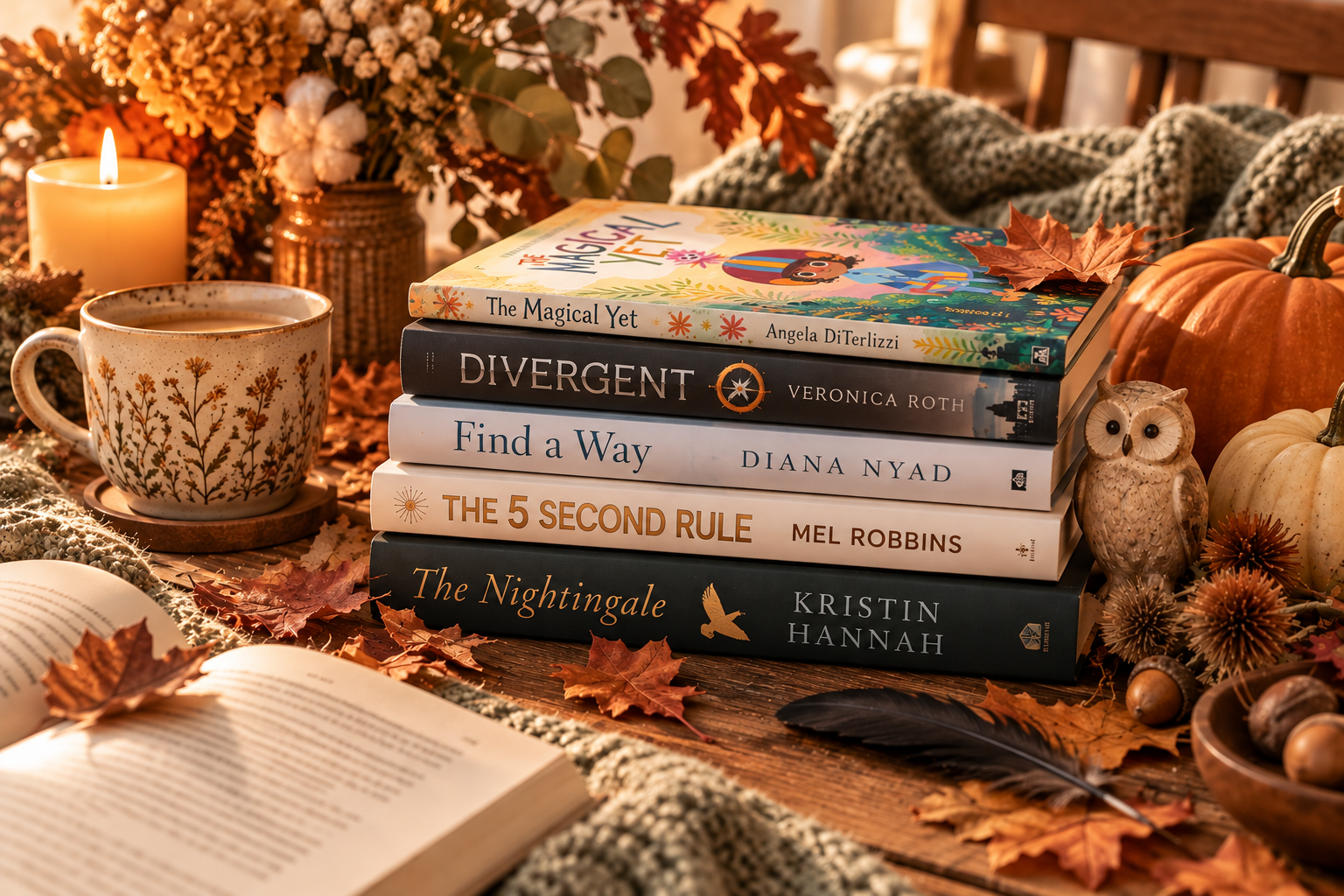


Fear doesn’t go away. That’s where this month’s guide starts — not with fearlessness, but with the quieter practice of feeling afraid and going anyway. Five books, five ages, one question running through all of them: what would you do if you went anyway?