Read Together · The Tier Explainer
One Theme, Every Age
Why Read Together is built the way it is — and how to use it, whatever your family looks like.
A few people have asked me some version of the same question since I started Read Together: why five books? Why not just one?
It's a fair question. Most book clubs pick one title and everyone reads it. That's simpler. It's also, I think, the wrong shape for what I actually wanted to build.
Here's the truth: I didn't want a book club for readers. I wanted a book club for families — and families are made up of people at very different stages, with very different attention spans, reading levels, and capacities for a 300-page memoir. A book club that only works for one kind of reader leaves almost everyone else out of the conversation.
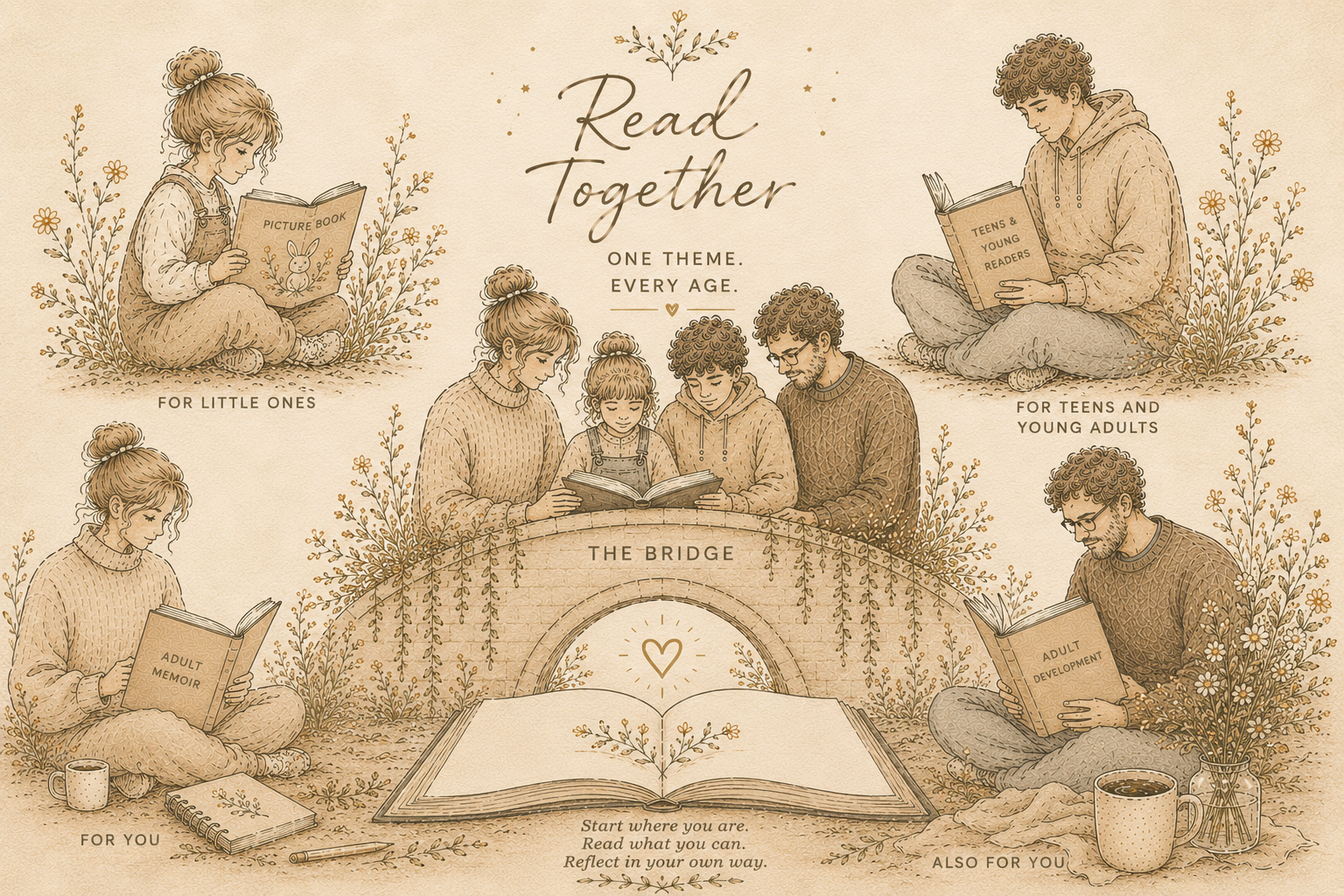
So, I built Read Together differently. Every month, there isn't one book. There are five — and they're not five random picks. They're five doors into the exact same room.
How it actually works
Every month, Read Together centers on one theme. This month it's creativity and innovation. Last month it was leadership and influence. The theme doesn't change based on age — it's the same idea, the same question, sitting underneath everything we read.
What changes is the door you walk through to get there.
One picture book. This is the youngest entry point — usually a beautifully illustrated story that introduces the month's theme in its simplest, most visual form. This July it's Beautiful Oops! by Barney Saltzberg, which teaches the theme of creative freedom through something as small as a paint smudge turning into a frog. A four-year-old understands this completely. So does a forty-year-old, honestly.
One book for teens and young readers. This is the bridge — written for a slightly older, more independent reader, but still accessible without requiring a heavy personal-development vocabulary. This month it's Steal Like an Artist by Austin Kleon — short, visual, and built for someone who's just starting to wonder who they want to become.
Two books for adults. I always pair one memoir with one nonfiction, personal development read — and I do this on purpose. A memoir lets you sit inside someone else's lived experience of the theme — this month, Elizabeth Gilbert's Big Magic and her own complicated relationship with fear and creativity. The nonfiction read gives you a framework to actually do something with that experience — this month, Tom and David Kelley's Creative Confidence, which treats creativity as a buildable skill rather than a personality trait.
One for the fiction reader. Because sometimes a story reaches somewhere a framework can't. The fiction pick doesn't instruct or explain — it puts you inside a life and lets the theme find you from the inside out. This month that's Tomorrow, and Tomorrow, and Tomorrow by Gabrielle Zevin — a novel about two people who spend thirty years making something together, and what that kind of creative devotion actually asks of you. You don't need to know anything about video games to be completely undone by it.
Five books. One theme. Every age covered.
Why this matters more than it sounds like it should
Here's what I actually care about: I don't want leadership, or emotional intelligence, or creativity, or any of these themes to be something only adults get to think about while kids wait until they're "old enough."
My daughter is two and a half. She can't read Untamed or Big Magic or Becoming. But she can hear a story about an imaginary friend who goes looking for his person. She can make a mess with paint and call it beautiful. She can feel the invisible string between us when I drop her off somewhere and she's not sure I'm coming back.
I want to raise a daughter who grows up knowing that the big ideas — how we connect, how we create, how we lead ourselves and each other — aren't reserved for when she's older. They're already hers. We're just meeting them at different depths, at the same time, from the same starting place.
That's the whole design. Not a reading list. A shared room with five different doors.
You don't need to use all five
I want to be honest about something: most people reading this aren't sitting down with all five books every month, and that's completely fine. Some months you'll only have bandwidth for your own adult read. Some months the picture book is the only one that gets read out loud at bedtime, three nights in a row, because your toddler demanded it.
Pick the door that fits your month. Skip the ones that don't. The theme will still be there waiting for you next time.
Something I built
I've been thinking a lot about how to actually help bridge these five books together — something that gives you real conversation starters, family activities, and journaling prompts across every age, so the "shared room" idea becomes something you can actually sit in together, not just something I describe in a blog post.
So I built it.
It's called the Read Together Bridge Guide, and the July edition — Creativity & Innovation — is ready for you right now as a free sample. It walks through all five books with one conversation starter, one family activity, and one journaling prompt per book, plus a single "bring it together" question designed to pull every age into the same conversation at the same dinner table.
I put together a free sample of the bridge guide for July — conversation starters, family activities, and journaling prompts for all five books, plus one question designed to bring every age to the same dinner table conversation. It's yours, no strings attached
More soon.
Start where you are.
Read what you can.
See where it takes you.
If you've been overwhelmed by Read Together, or unsure which book is "the" book each month — I hope this clears it up a little. There's no single right way to do this. There's just the door that fits where you are this month.
A deep breath in a beautiful life.
— Britt
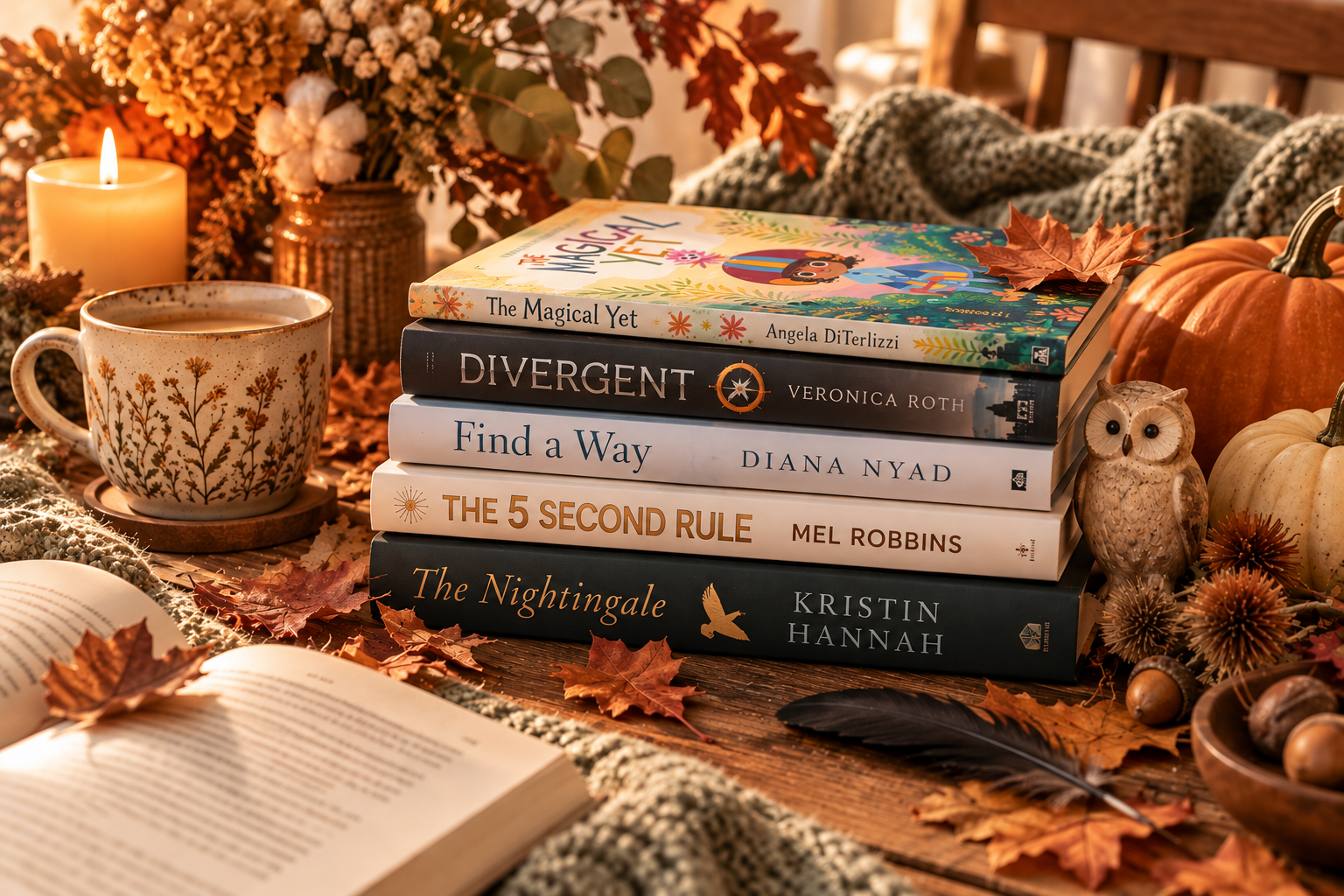


Fear doesn’t go away. That’s where this month’s guide starts — not with fearlessness, but with the quieter practice of feeling afraid and going anyway. Five books, five ages, one question running through all of them: what would you do if you went anyway?