Read Together · July 2026 · Mid-Month Check-In
On Being Creative Without Being the Expert
A mid-month pause to reflect on what's stayed with us — and open the conversation.
We're halfway through July, and I've been sitting with something that happened this week that I didn't expect to feel as significant as it did.
My husband came home from work and shared a problem he witnessed happen at work. Not a dramatic one — just the kind of everyday workplace puzzle that sits in the background of a busy week, the kind where you know something isn't working but you can't quite see the shape of a solution yet.
I'm not in his industry. I don't know his company's systems or processes or the particular politics of his team. I have no formal expertise in what he does.
But I listened. And at the end of it I asked if he wanted my advice. And then I offered a solution.
Not from a place of knowing the product or the company — but from a place of understanding how people think, work, and feel. How they get stuck. What makes something feel impossible versus what makes it feel worth trying. How to solve for the human being at the center of the problem, not just the problem itself.
He brought it to work. His manager loved it. It was submitted for an excellence award.
The thread: What it means to be creative without being the expert
We started this month asking what we would make if we gave ourselves real permission. Halfway through July, I think the answer is getting clearer — and it's simpler than most of us expect.
You don't need to be the expert. You need to understand the people.
The child in Beautiful Oops! doesn't need art school to turn a spill into a frog. She just needs to look at the mess differently. Austin Kleon doesn't ask his readers to be original — he asks them to be curious about the things that move them and brave enough to make something from that curiosity. Elizabeth Gilbert doesn't promise that fear goes away — she promises that your relationship with it can change. And Tom and David Kelley don't argue that creativity is reserved for designers at IDEO — they argue it's available to anyone willing to start with the question: what do the people in this situation actually need?
That's the thread running through every book this month.
Creative confidence isn't a credential. It's a practice.
What I'm reading
I just started Creative Confidence by Tom and David Kelley — the founders of IDEO and Stanford's d.school — and I'm only a few chapters in, but I am absolutely loving it.
Their central argument is this: design thinking, the methodology behind some of the world's most innovative products and solutions, begins not with expertise in the subject but with empathy for the people involved. You don't need to be the expert in the room. You need to be the most curious person in the room. The one who asks what people actually need rather than assuming you already know.
I read that and I thought about my husband's problem.
I thought about how I arrived at a solution not because I knew the answer but because I knew how to think about the people around the problem. And I felt something I didn't have a name for until I read this book: creative confidence. The quiet, specific belief that your way of thinking — even when it doesn't come with a title or a credential — has value.
What it felt like
When he told me the solution had been submitted for an excellence award, I felt validated in a way that went deeper than I expected.
Not because I needed someone else's approval. But because the idea was seen. Because someone in a room I'll never sit in looked at something I offered from the outside and recognized that it was worth something.
I was proud of both of us. Proud that my way of thinking — the empathetic, people-first approach that runs through everything I do, from how I run to how I parent to how I built this brand — turned out to be exactly the right tool for a problem I knew nothing about on paper.
And I was proud of him for trusting it. For bringing an idea that came from his wife — not from a consultant, not from a colleague with a relevant degree — into a room full of people who evaluate solutions for a living, and saying: I think this is worth considering.
That trust is its own kind of creative courage. And I think it might open doors for him that wouldn't have been open before. One act of creative confidence tends to unlock more. Tom and David Kelley say that. I believe it now in a way I couldn't have last week.
Let's Discuss
This is the part I look forward to most. You don't have to have finished your book. You don't have to have the perfectly formed thought. Just bring what's stayed with you.
Here are some additional prompts for this month. Take what resonates, leave what doesn't.
Discussion prompts
One question for each reader in your life — or all four for yourself.
For your little one
Has something gone "wrong" this month that turned into something better? A drawing that became something else, a recipe that changed, a plan that shifted? Tell me what happened.
For your teenager
Who's someone whose way of thinking you really admire — not just their work, but the way their mind works? What would you make if you let yourself be influenced by them?
For you
Where have you solved a problem or offered an idea this month that surprised you? Where did your way of thinking turn out to be exactly the right tool — even when you didn't have the obvious credentials for it?
For the fiction reader
Sam and Sadie pour everything into making something together. What's something you've made — or are making — that feels like it's asking everything of you? Is that a good thing?
A note on where to buy
Every book mentioned here links to Bookshop.org — buying through these links supports independent bookstores in your community, not a warehouse. Same books, same price, a better place for your money to land.
There's no right place to begin. Just the place you're drawn to today.
A gentle reminder
You don't have to have finished the book to have something worth saying. You don't have to have the most insightful answer or the perfectly formed thought.
Come as you are. Share what stayed with you. Reflect in your own way.
That's enough.
Start where you are.
Read what you can.
Reflect in your own way.
I'd love to hear where you are with your reading this month — which book you reached for, what's landed, what's still sitting with you. Leave a comment below and let's keep the conversation going. This is what Read Together is for.
Here's to growing together this month.
A deep breath in a beautiful life.
— Britt
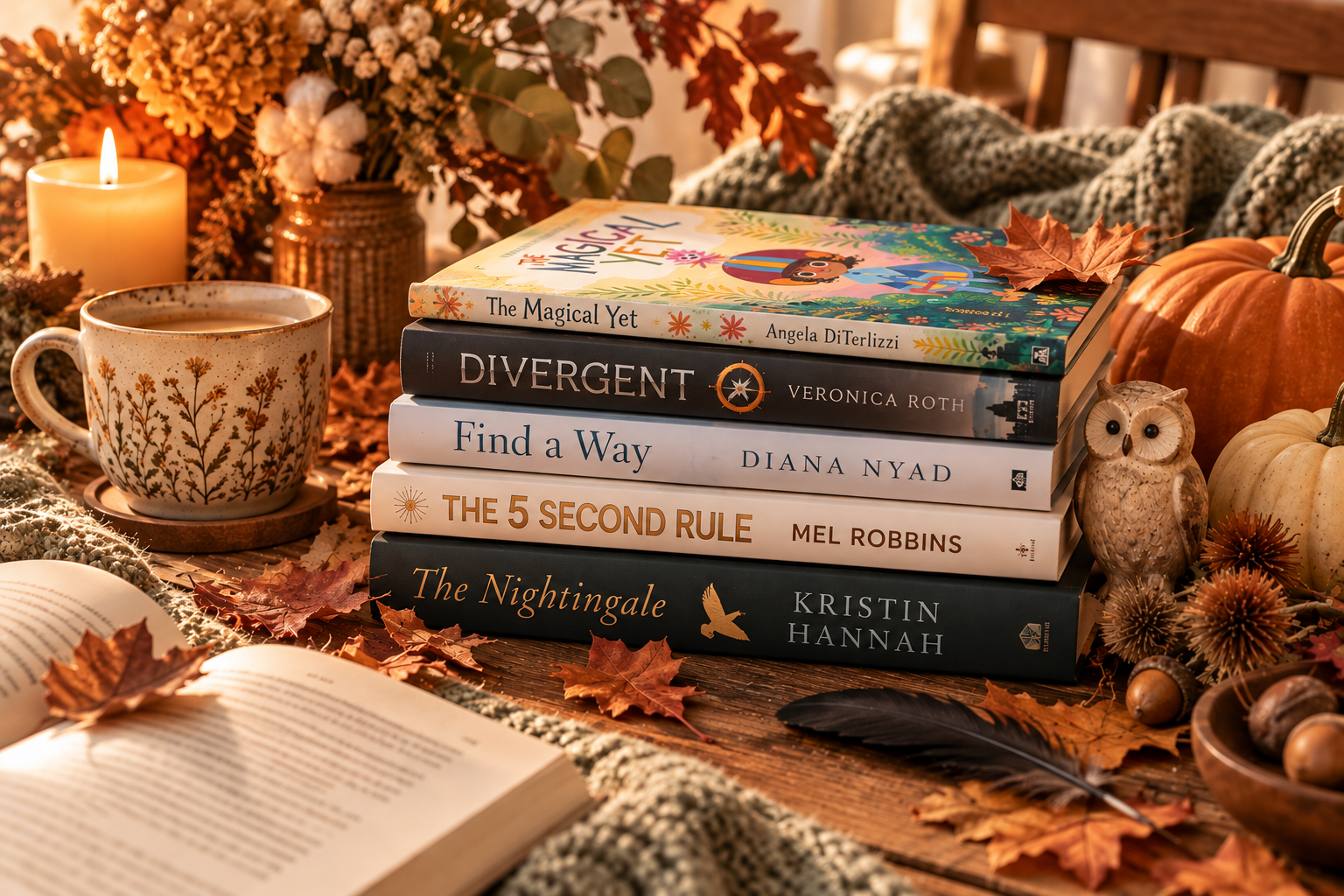


Fear doesn’t go away. That’s where this month’s guide starts — not with fearlessness, but with the quieter practice of feeling afraid and going anyway. Five books, five ages, one question running through all of them: what would you do if you went anyway?