Wildflower Running Blog · June 2026
On Running When the Heat Gets There First
I didn't leave the house until after eleven.
That sentence is doing a lot of work, so let me back up. I woke up already behind. The kind of night where the room never quite cools down, where you surface somewhere around 5am with that thick, post-nasal heaviness in your throat and think: this is not going to be a good sleep night, and then it isn't. I lay there longer than I should have, half-rested, telling myself I'd make up for it with a good morning.
Then I spent twenty minutes I didn't have looking for a piece of running gear I was sure I owned — somewhere in a drawer, a basket, a bag I hadn't unpacked — and never found it. So, I went out without it. Small thing. But it's never just the gear. It's the twenty minutes that gear-hunting cost me, twenty minutes that pushed my run later into a morning that was already warming up fast.
Breakfast was half a banana, only half because my daughter decided she also wanted banana for breakfast and we didn’t have a second banana, with peanut butter, eaten standing at the counter, more out of habit than hunger. It's a fine snack. It is not enough food to run on, and by the time I actually got moving — later than I meant to, hungrier than I realized — most of whatever energy it gave me had already been spent just getting out the door.
So: under-slept, under-fed, later than ideal, in heat that had already arrived before I had. I knew enough to stack the deck in my favor where I could. I filled up some cold-water bottles, put in my headphones and queued up an audiobook instead of a playlist — partly because I wanted to finish my book, but mostly because I didn't trust myself with a beat. Music has a way of pulling your legs into a pace that has nothing to do with how your body actually feels that day, and on a morning like this one, I needed something steady and unhurried in my ears, not something urging me faster.
It didn't take long to know this wasn't going to be the run I'd planned. I found myself stopping more than usual — walking stretches I'd normally run straight through, letting my heart rate settle before picking it back up. And somewhere around what should have been the final stretch, I made the call to just stop a mile short and head for home early.
That decision came easier than it would have a few years ago. I've trained through enough mediocre, miserable runs to know what they cost — not just in the moment, but in the days after, in how my body recovers, in whether I show up for the next run feeling capable or already worn down. A mile cut short today is not a mile lost. It's a mile saved for a morning that's actually going to give something back.
Heat doesn't ask permission. It just shows up, and asks you to run differently than you would otherwise — earlier, slower, lighter, more honest about what you have that day. Some mornings I get that right. Today I got most of it wrong and still made it home okay, which might be its own kind of lesson.
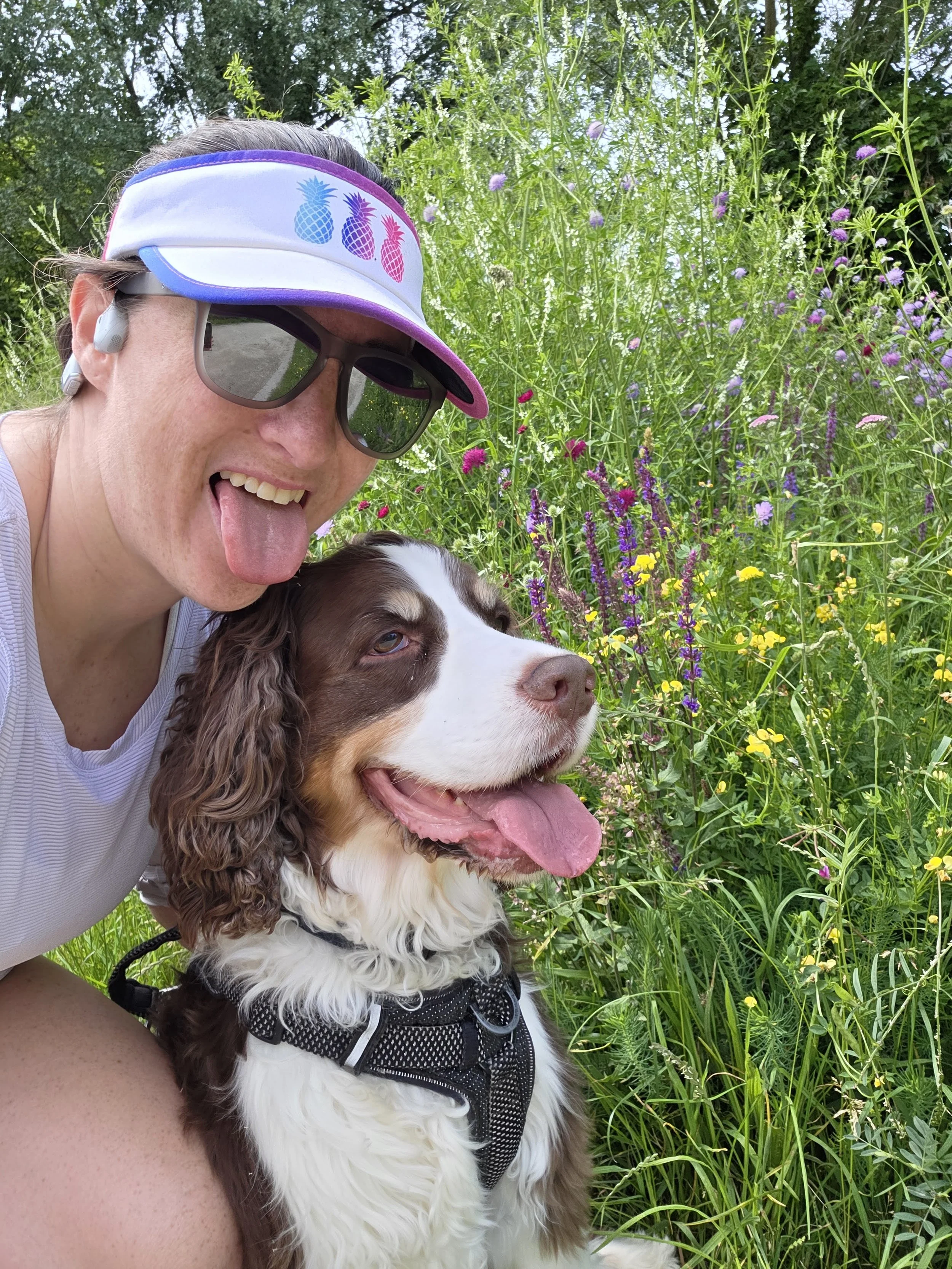
Heat doesn't ask permission. It just shows up, and asks you to run differently than you would otherwise

A few things I've been reminded of, the hard way, about running in the heat:
Get out before the heat does. This sounds obvious until you're the one who didn't. Even an hour earlier changes the whole math of a run — the air, the sun angle, how your body responds. If you know your morning has a tendency to slip, build in the buffer before you need it.
Eat something that can actually carry you. A small snack is fine for a short, easy effort. For anything more, your body needs real fuel, and it needs time to use it before you start moving. Half a banana an hour before a hard run in the heat is not the same as half a banana right before you walk out the door.
Hydrate before you're thirsty. By the time you feel thirsty on a hot run, you're already behind. This one deserves its own post — there's a lot to say about it — but it's worth repeating here: never treat hydration as an afterthought when you're training in the heat.
Lay out your gear the night before. Not because gear makes or breaks a run, but because searching for it costs you the cool window you were trying to protect. Decide what you're wearing — and where it is — before you go to bed.
Choose your audio with intention. A strong beat will pull your pace whether your body is ready for it or not. On hot days, I reach for something with no rhythm to chase — an audiobook, a podcast — so my legs find their own pace instead of someone else's.
Let walking be part of the run. Heat changes what your body can reasonably do. Walking through it isn't failure; it's pacing. Some of my steadiest heat runs have had more walking in them than I'd ever admit to a coach.
Know the difference between hard and not worth it. There's a version of pushing through that builds you, and a version that just costs you. If a short, scaled-back effort protects how you feel tomorrow — and the run after that — it was the right call, not the lesser one.
Start where you are.
Run your pace.
Because there's no right pace.
Just yours.
Talk soon,
Britt



Race nerves are not a sign something is wrong. They're your body preparing. This practice doesn't eliminate them — it converts them. From anxious arousal to excited readiness. Same energy, completely different story. Five minutes before the start line changes everything about what you bring to the gun.