Root & Rise · June 2026
Leadership Starts in the Body
Four weeks of movement and reflection — built around what it means to lead from where you already are.

• • •
4 weeks ✦ Leadership & Influence ✦ Core & Spine
June arrived and I kept thinking about the word leadership. Not the version that lives in boardrooms or on LinkedIn. The quieter kind — the kind that asks you to know yourself well enough to decide what this season of training actually needs to be. Hard or easy. A goal race on the calendar or a slow trail walk with nowhere to be.
I still love a race. I still love the feeling of a training block with something real at the end of it. Competition has taught me things about myself I couldn't have learned any other way — layers I didn't know were there until I was tired and pushing anyway. That's real and I'm not here to take it away from anyone.
But I'm also here for the version where you lace up because it feels good and that's the whole reason. Where showing up is the entire point. Where you don't need a bib number or a finish time to justify the miles.
This month's movement is built around both of those truths. Four poses, four weeks, four themes that ask you to lead from the inside out — with awareness, stability, integrity, and presence. Not as performance for anyone else. As practice for yourself.
The through line
Leadership doesn't begin with influence over others. It begins with the decision to show up honestly for yourself — and to trust what you find there.
Week 1
Awareness
Cat–Cow
"Notice how you hold yourself."
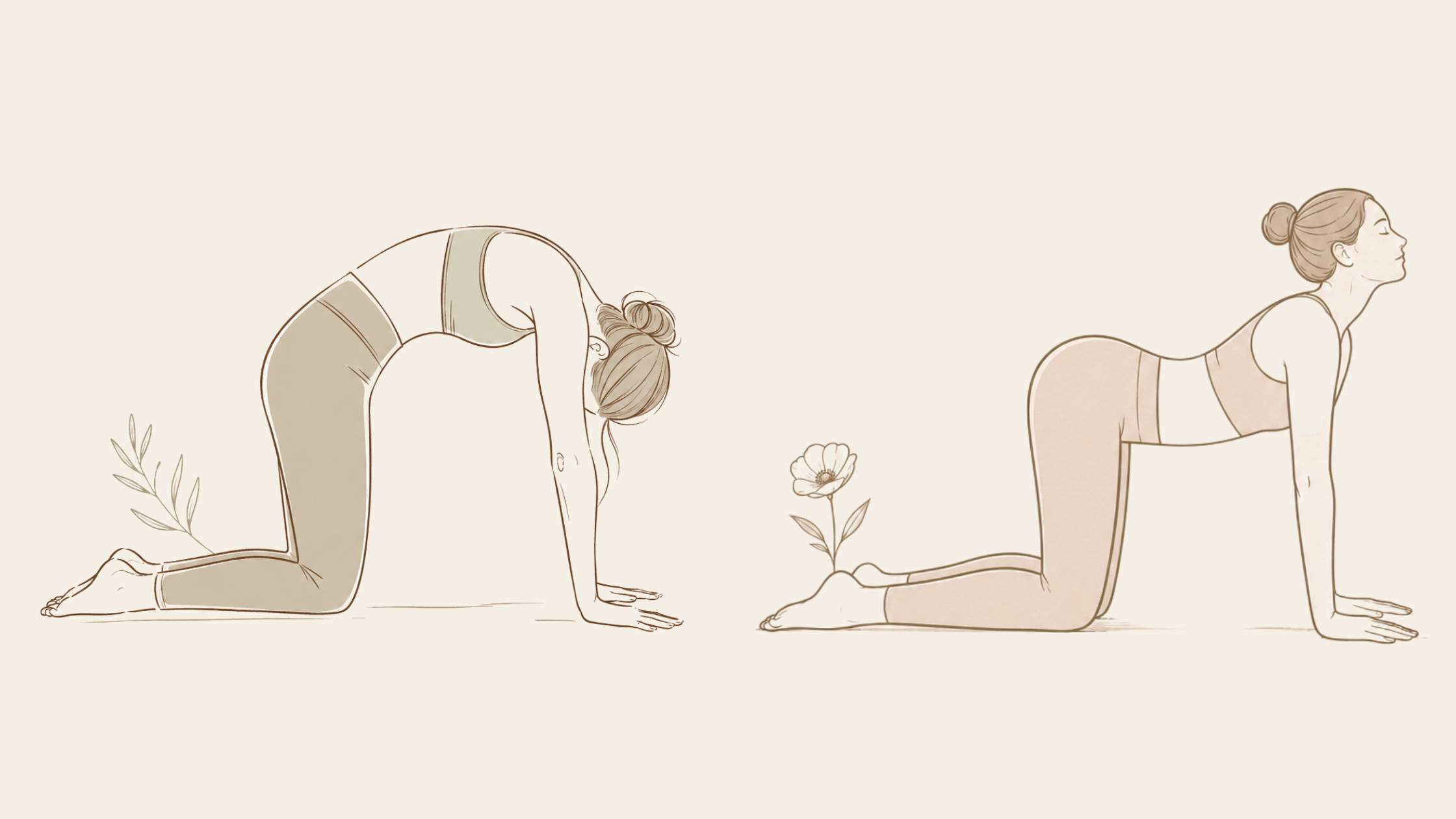
How to practice
Cat–Cow works by linking breath to spinal movement, which wakes up the nervous system gently and brings your attention into the body before anything else is asked of it.
-
Find your base
Start on your hands and knees, wrists beneath your shoulders, knees beneath your hips.
-
Inhale — Cat
Lift your chest and tailbone. Allow your belly to soften toward the floor.
-
Exhale — Cow
Round your spine. Draw your chin toward your chest. Press the floor away.
-
Move and notice
Move slowly between the two. Let your breath guide the movement. Notice what you notice — where you collapse, where you grip, where you disconnect.
5–10 breaths
The reflection
Awareness is the foundation of leadership — and it begins long before we ever step into a room with other people. It begins here, on the mat, noticing the places where we collapse, where we grip, where we go through the motions without really being present. Not to judge those patterns. Not to fix them immediately. Just to see them clearly.
The patterns we can see are the patterns we can begin to change. That's the whole invitation this week — to move slowly, stay curious, and notice what you notice.
"Before we lead outward, we tune inward. Leadership begins when you understand your own patterns — not by changing them immediately, but by seeing them clearly."
This week's reflection prompt
Where in my life do I lose alignment or shrink my presence?
Week 2
Stability
Plank — full or knees variation
"Build strength you can rely on."
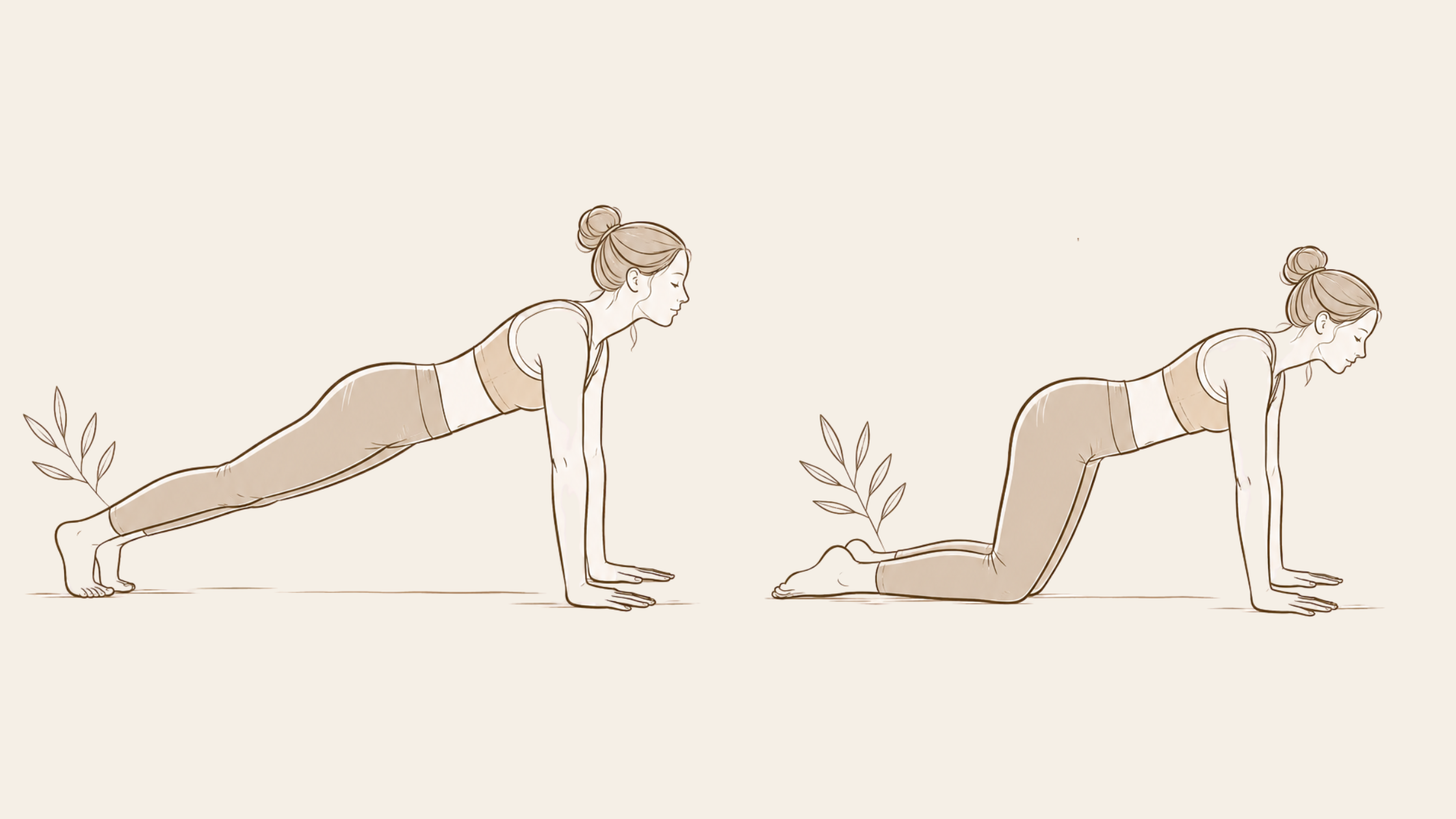
How to practice
Plank builds isometric strength — the kind that holds without moving. That's exactly what stability asks of us: not force, but sustained, organized effort over time.
-
Set your hands
Start with your hands beneath your shoulders, fingers spread wide.
-
Option 1 — Full plank
Lift your knees and extend your legs behind you, creating one long line from head to heels.
-
Option 2 — Knees down
Keep your knees on the floor for additional support. The integrity of the shape matters more than the variation.
-
Hold and notice
Draw your belly gently inward. Press the floor away. Steady breath, steady effort. Notice where you feel strong and where you compensate.
15–30 seconds
The reflection
Stability isn't about rigidity. It's about having a foundation you can actually trust — something steady enough to come back to when everything else feels uncertain. In plank, we learn this physically. The temptation is always to push harder, hold longer, prove something. But the pose teaches the opposite: organize your strength and it carries you. Force it and it collapses.
The people we trust most aren't always the loudest or the strongest. They're often the most consistent. Small choices, small commitments, small moments of showing up — that's what stability actually looks like.
"True leadership isn't rigid — it's supported. You don't have to push harder. You just have to organize your strength."
This week's reflection prompt
Where do I need more support instead of more effort?
Week 3
Integrity
Seated Twist
"Move from your center."
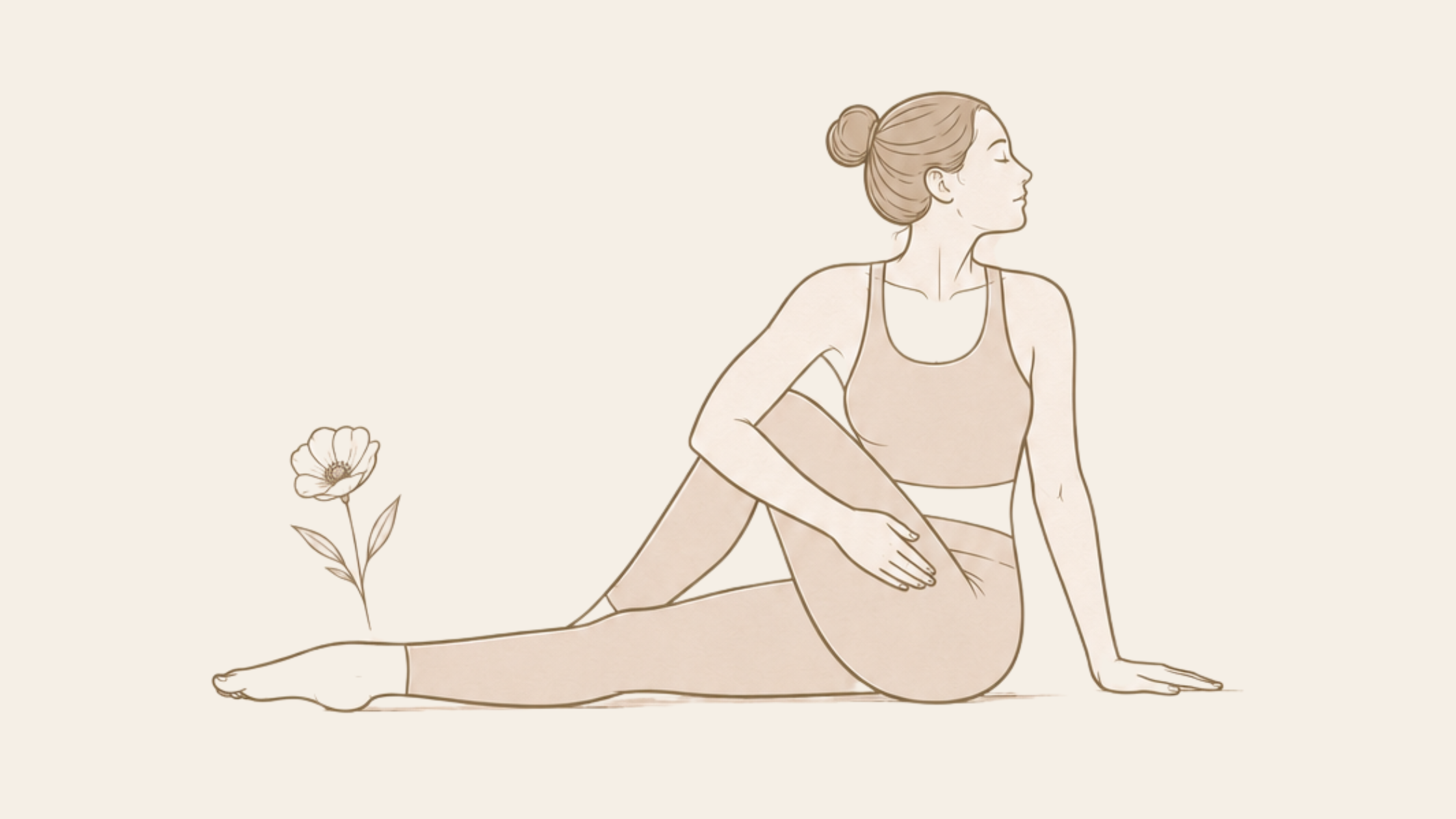
How to practice
Twists decompress the spine and stimulate the nervous system — but only when initiated correctly from the core. Forcing the rotation from the shoulders compresses rather than creates space.
-
Find your seat
Sit comfortably with a long spine. Let both sit bones connect evenly with the floor.
-
Inhale — lengthen
Lengthen through the crown of your head. Create space in the spine before you ask it to rotate.
-
Exhale — rotate
Gently rotate from your center — not your shoulders. Place one hand behind you and the opposite hand to your knee.
-
Breathe into it
Length first, twist second. Breathe into the space you create. Repeat on both sides.
3–5 breaths per side
The reflection
A twist isn't created by pulling harder with your shoulders. It begins from your center — and only after you've created length. Force it before you're ready and the spine compresses. Let it unfold from the inside out and you find space you didn't know was there.
Leadership with integrity works the same way. It isn't about doing more or becoming someone else. It's about allowing your actions to reflect what you already know matters most. Your values. Your priorities. The things you'd choose even when no one is watching. You can be adaptable without losing yourself. You can be flexible without abandoning your foundation.
"You can be flexible and grounded at the same time. Integrity means your movement comes from your center — not from pressure, not from habit, but from what you actually believe."
This week's reflection prompt
Am I acting from alignment — or reacting from pressure?
Week 4
Presence
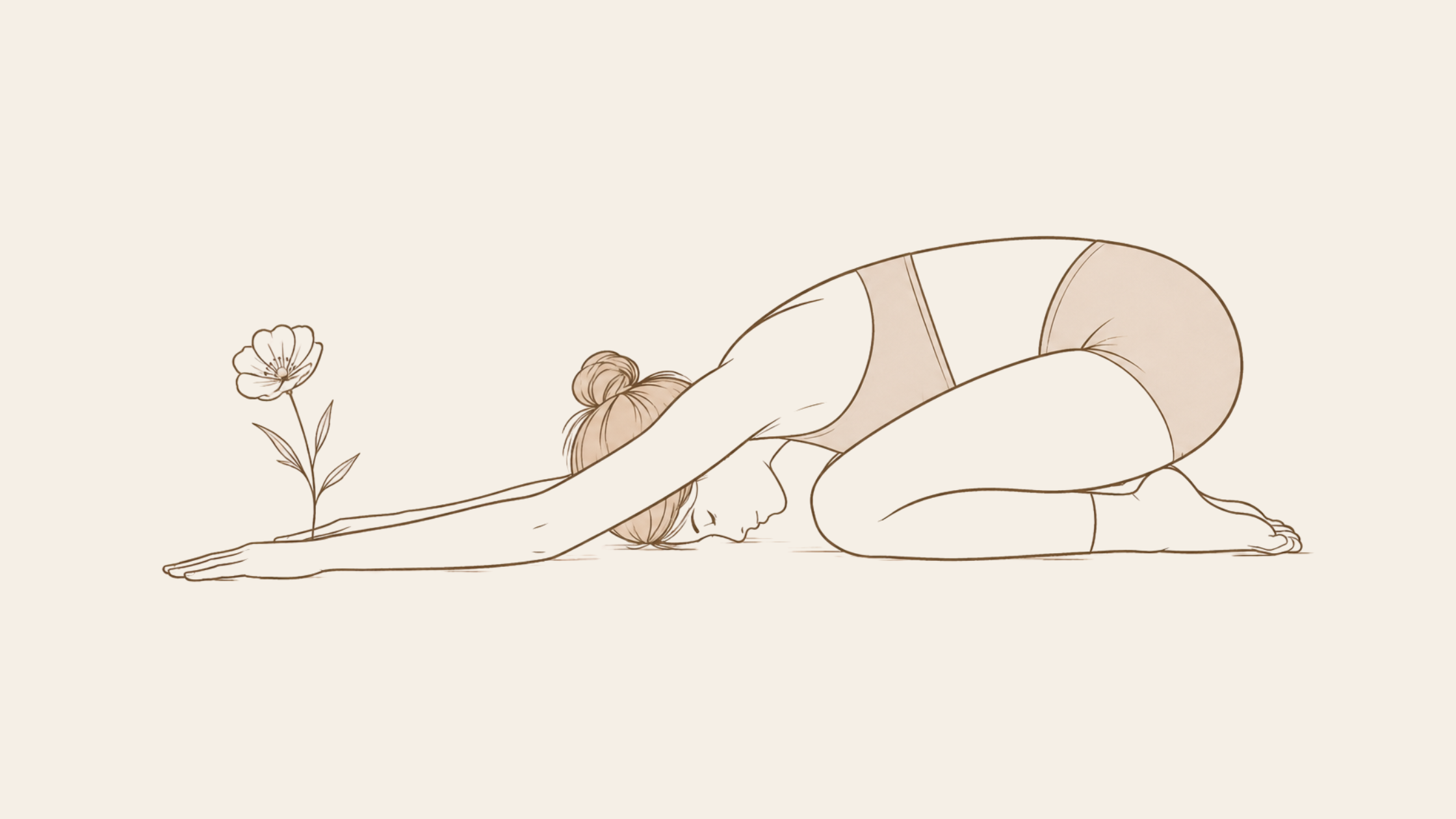
Child's Pose
"Lead with calm confidence."
How to practice
Child's Pose activates the parasympathetic nervous system — the rest and digest state. It's a physical signal to your body that it's safe to stop, which is the prerequisite for genuine presence.
-
Arrive in the shape
From hands and knees, bring your hips toward your heels. Let your forehead rest on the mat.
-
Choose your arms
Extend your arms forward or rest them alongside your body — whichever feels like more of a release.
-
Soften everything
Let your shoulders soften. Allow your breath to slow. Nothing to force. Nothing to achieve.
-
Simply rest
Notice what happens when you stop striving. Notice where you've been holding unnecessary effort. Stay here.
30–60 seconds
The reflection
Presence isn't about doing more. It's about being fully here — which is harder than it sounds when the world keeps asking you to be somewhere else. Child's Pose is a radical act for anyone who has learned to equate worth with productivity. It asks you to stop. To rest. To trust that nothing falls apart when you pause.
The most powerful presence in a room is often the most grounded one. Not the loudest. Not the one trying hardest to be seen. The one who has nothing to prove because they're not performing. Rest is part of strength. Reset creates clarity. And presence allows us to show up with intention rather than just urgency.
"Leadership isn't always found in action. Sometimes it's found in stillness — in the pause before a response, in the confidence to trust that not every moment requires more from you."
This week's reflection prompt
What helps me feel calm, steady, and fully present?
Putting it together
Your June practice
If you're coming to this guide partway through the month — or returning to it after June has passed — here are two ways to move through these four practices.
As a weekly rhythm
Cat–Cow daily for 5–10 breaths. Use it as a morning check-in — before coffee, before your phone, before anything else asks something of you. Just notice.
Plank holds, 3–4 times across the week. Both variations are valid. Notice what "organized strength" actually feels like versus forced effort.
Seated Twist morning or evening, 3–5 breaths per side. Pair it with the reflection question — let the physical and the inner work talk to each other.
Child's Pose as a reset — not just once but whenever the month feels like it's running you. 30 seconds is enough. You don't have to earn the rest.
As a single flowing sequence
If you want to move through all four in one sitting, this is the order. It builds naturally from noticing to steadiness to depth to rest — about 10–15 minutes total.
From Bloom Within this month
If June's theme of leading from the inside out is resonating, the Grounded authority breath in Bloom Within was written for exactly this — a practice for before a hard conversation, a presentation, or any moment you need to show up from a steady place rather than a reactive one. The two practices work well together.
"Leadership isn't about becoming louder. It's about becoming more grounded in your truth."
Plant your feet.
Open toward the light.
This is how we grow.
A deep breath in a beautiful life.
Talk soon.
— Britt

Three weeks ago I started a run club. One Saturday nobody came. The surface version of that morning was fine — we went to the coffee shop, it was lovely. The underneath version is what I've been sitting with since. On loneliness, the village shrinking, and what it looks like to finally stop moving past the fear long enough to be with it for five breaths.