On losing running, and finding it again on your own terms
For most of my life, movement came with a purpose built in — there was always a season, a schedule, a meet on the calendar telling me why I was working and what I was working toward. I spent years being very good at exercise and having almost no idea why I was actually doing it. The reason was always handed to me from the outside, and I got so used to running toward something specific that when the something specific disappeared, I had absolutely no idea what to do with my body —the irony of an exercise biology major not knowing what to do about exercise.
I ran in college. Division I Track and Field, but my experience was less track and more field, meaning that it felt a lot less easy to translate doing my “sport” into the concept of “exercise” or “I’m working out”. Don’t be mistaken, that sport meant the world to me and it formed me to be the person I am today, but sometimes I feel like I would have had an easier time if I had been training for a 10k — there weren’t too many casual meet-up groups around throwing a javelin on a Saturday morning before coffee. Your training schedule, your race schedule, your weight, your recovery, your rest days, even how you're supposed to feel about all of it: someone else has opinions about all of it, and those opinions carry weight. You learn to perform your relationship with running. To look like someone who loves it, whether you do that day or not.
The day I competed in my final track meet of college I sat down and cried. Not a joyful cry where you look back and think how happy you are for the wonderful memories, but an angry hate cry because I knew that I would never get to do that again, and that feeling terrified me.
By the time I graduated, I was lost with no guidance to help me find my way back to how to connect with exercise in this new season of my life. What did it mean for me to just “go to the gym” without a final date on the calendar to work towards. I’d never gone for an “easy 5k” before, why would I start now?
I didn't stop moving entirely — I never really could — but I lost the thread of why for a long time. Exercise became something I did because everyone knew me as the girl who ran track and field in college, and I didn't know how to be her without the sport to prove it. It was still a transaction. It just had different terms.
But after years of suffering and trying to force myself to feel and look like a person who loves long distance running, I finally truly started to.
It was late November of 2020, and my husband and I were starting our life changing journey together to move to a new country, but in the meantime, I would be living with my parents with our dog and our cat while I sorted through all the legal immigration details. I don’t know if you’ve ever had to move back home to your childhood home in your adult years, but let me tell you, it was an experience that I both cherish but also found so challenging in the moment.
Between working remotely from home full time and feeling as though I was a house guest living out of a suitcase, I found myself taking to the trails of Marin County every day with my dog just to have a moment of alone time to feel like myself. I had never been a hiker before, despite growing up surrounded in this beautiful forest environment, but with not much else to do and my dog needing to go for a walk, I found myself craving and falling in absolute love with trail running. It felt like the first time where I had fully chosen exercise for myself and loving every moment of it.
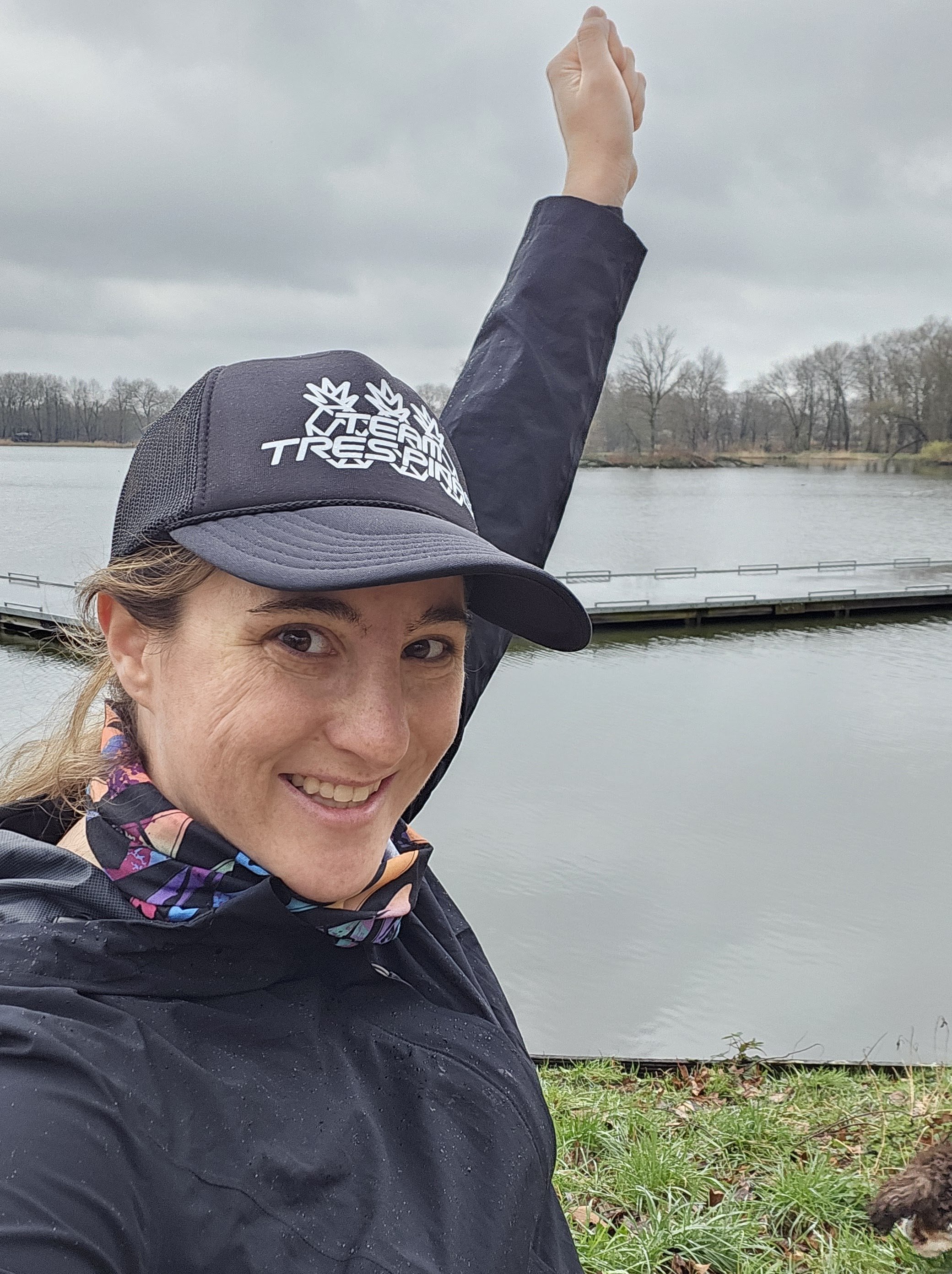
Fast forward many years, I had a baby, and my body did something I hadn't anticipated: it needed movement the way it needed sleep. Not to perform or manage or achieve anything. Just to feel like itself again. I remember the first time I went for a run postpartum — not a serious run, not a training run, just a slow loop around the neighborhood while my husband watched the baby — and about ¾ of a mile in I had this moment where things just felt familiar. I raised my hand up in the air and took a picture of myself smiling — an actual smile, not a forced version true friends can see through— because it felt like coming home to a version of myself, I hadn't visited in years.
Nobody was timing me. Nobody was watching my form or assessing my fitness or deciding if I was working hard enough. It was just me and the road and the particular quiet that only running ever gives me. I had forgotten that it could feel like that.
This is what I want to tell you when I say get some exercise every day: I'm not talking about output. I'm not talking about getting back into shape or burning anything off or earning anything. I'm talking about the thing underneath all of that — the part that's actually about being in your body, on your own terms, for no reason except that it's yours.
New motherhood can make your body feel like a resource. Something that exists to be used — by the baby, by the recovery process, by everyone else's needs. Daily movement, even very small movement, is the practice of remembering that your body is also just where you live. It's yours. It gets to feel good.
Some days that looks like an actual run, shoes tied, playlist queued, the whole thing. Some days it's a walk with the stroller where I go slowly enough to notice what's blooming. Some days it's ten minutes of stretching on the living room floor while the baby, now toddler, plays next to me, and I count that, because it counts. The point is the dailiness of it — the small, repeated act of showing up for your own body like it matters. Because it does.
Some days I'm all the way there. Some days I'm still untangling old stories about what it means to be fast enough or consistent enough or serious enough. But I go anyway. Every day, something. Because the version of me who stopped going entirely — who let the exhaustion and the old, complicated feelings win — that version was quieter and smaller and less herself.
I don't want to be her anymore. So I put on my shoes.
That's all it ever has to be. Just put on your shoes. The rest tends to follow.
Talk soon, Britt ✿
Talk soon.
— Britt
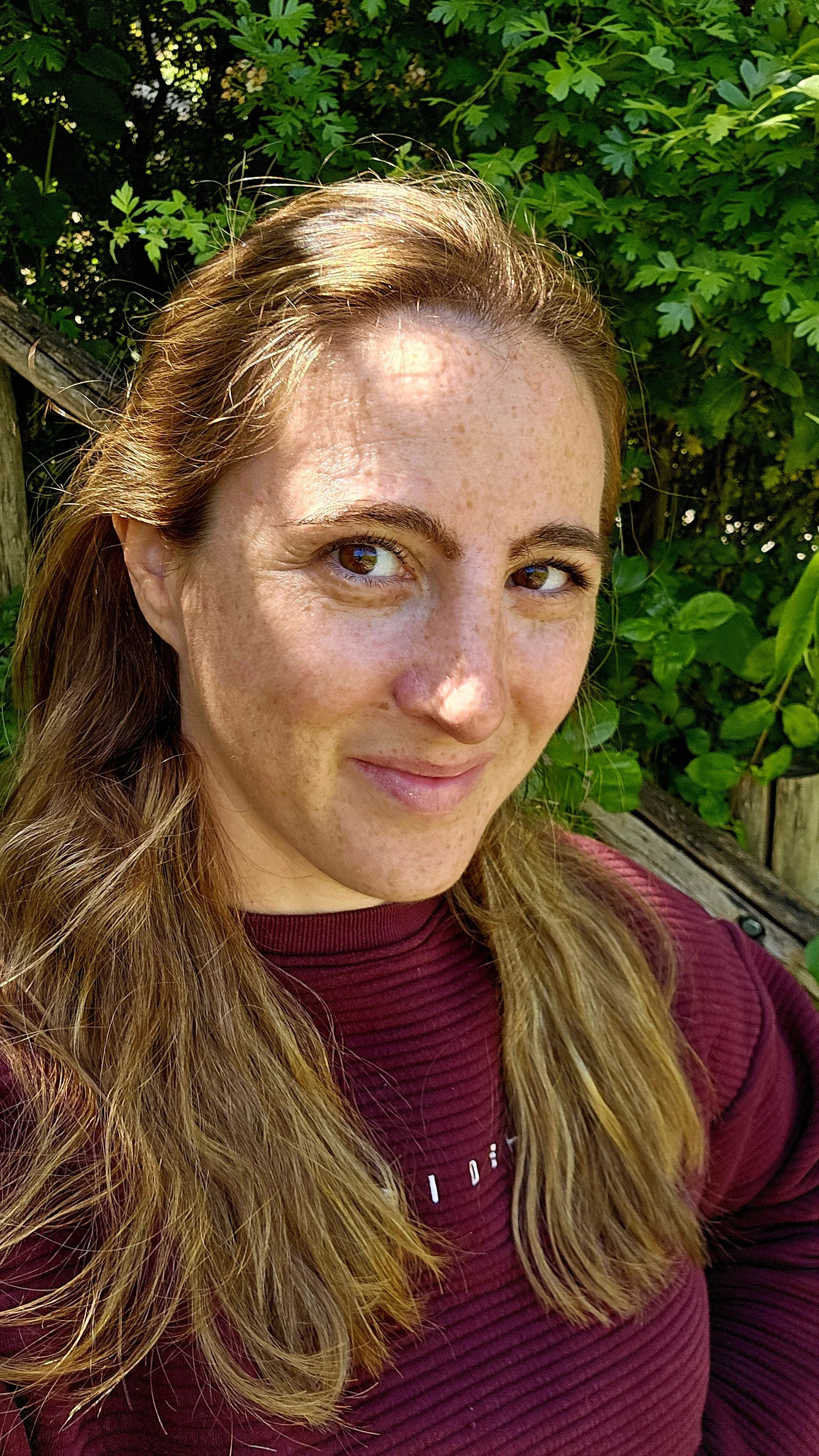


I spent years being very good at exercise and having almost no idea why I was doing it outside of competition. A Division I athlete who lost her relationship with movement the moment the sport ended — and had to find her way back to it entirely on her own terms.